Table of Contents
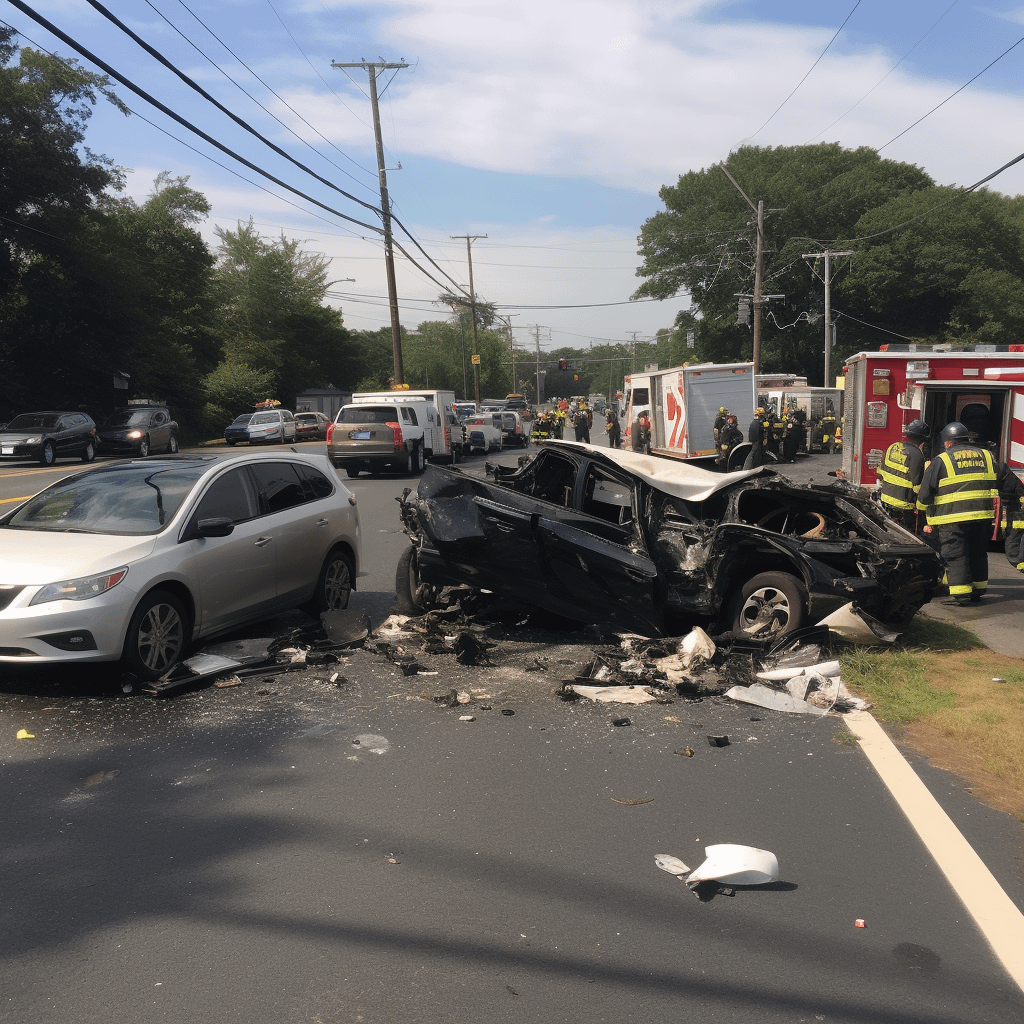
A serious crash on the Long Island Expressway, Sunrise Highway, or a side street near home can change everything in a matter of seconds. Medical bills start arriving before you have left the hospital, your car is in the shop or totaled, and the at-fault driver’s insurance company is already looking for ways to pay you less than your claim is worth. At Russell Law, our Long Island motor vehicle accident lawyers step in to handle the insurance carriers, the investigation, and the legal deadlines so you can focus on getting better.
Our attorneys have recovered more than $200 million for injured clients across Nassau and Suffolk Counties. Whether you were hit by a distracted driver on the Northern State Parkway, sideswiped by a tractor-trailer on Route 110, or struck by a vehicle while walking on a Suffolk County crosswalk, we are ready to fight for the full value of your case.
What To Do After an Accident


Types of Motor Vehicle Accident Cases We Handle on Long Island
A motor vehicle accident claim can arise from any collision involving a vehicle on the road, and the rules and insurance issues can vary significantly depending on the type of vehicle involved. Our Long Island motor vehicle accident attorneys represent injured clients in cases involving:
- Car accidents — rear-end collisions, head-on crashes, side-impact and T-bone wrecks, multi-car pileups, and parking-lot incidents
- Truck accidents — crashes involving 18-wheelers, tractor-trailers, box trucks, delivery vans, and commercial fleet vehicles, which often implicate federal trucking regulations and corporate defendants
- Motorcycle accidents — collisions in which the motorcyclist almost always bears the brunt of the injury
- E-bike accidents — a rapidly growing category of cases on Long Island streets
- Pedestrian and bicycle accidents — crashes at crosswalks, intersections, and uncontrolled roadways
- Rideshare crashes — collisions involving Uber, Lyft, and other rideshare drivers, where multiple insurance policies may apply
- Bus and commercial vehicle accidents — including Suffolk County Transit, Nassau Inter-County Express (NICE) buses, school buses, and private charters
- Hit-and-run accidents — where the at-fault driver flees, and recovery often runs through your own uninsured/underinsured motorist coverage
If you were hurt in any kind of crash on Long Island and are not sure where your case fits, call us. We will evaluate the facts and tell you honestly whether you have a claim worth pursuing.
Who’s Responsible for My Medical Bills After an Accident?

Common Causes of Car Accidents on Long Island
Most serious crashes come down to driver error. Identifying the cause is the foundation of proving negligence and recovering full compensation. The most common causes we see on Long Island roads include:
- Distracted driving — texting, scrolling, eating, or using a navigation app behind the wheel
- Drunk or drugged driving — impaired operation remains a leading cause of fatal Long Island crashes
- Speeding and aggressive driving — common on the LIE, Sunrise Highway, and the Northern and Southern State Parkways
- Fatigued driving — especially among long-haul truckers and shift workers
- Failure to yield, running red lights, or running stop signs — frequent at busy intersections in Hempstead, Babylon, Brookhaven, and Huntington
- Following too closely — a leading cause of rear-end collisions during rush-hour congestion
- Inclement weather — snow, ice, fog, and heavy rain combined with speed
- Defective vehicle parts — tire blowouts, brake failures, and faulty airbags that may trigger product liability claims
- Poorly maintained roadways — potholes, missing signage, or inadequate lighting, which can give rise to claims against the municipality responsible
How Much Insurance Do I Need to Protect My Family?

Common Car Accident Injury Claims
Even a “minor” fender-bender can leave a person with injuries that take months or years to fully heal — and some never fully resolve. We routinely handle cases involving:
- Whiplash and soft-tissue injuries to the neck, back, and shoulders
- Herniated and bulging discs that may require injections or surgery
- Spinal cord injuries, including partial or complete paralysis
- Traumatic brain injuries (TBIs) ranging from concussions to permanent cognitive impairment
- Broken bones and fractures of the ribs, wrist, leg, hip, or pelvis
- Internal injuries to the organs, often not apparent until hours or days after the crash
- Lacerations, burns, and permanent scarring
- Post-traumatic stress disorder (PTSD) and other psychological injuries
Because some serious injuries do not produce symptoms right away, you should always be evaluated by a medical professional after a crash, even if you feel “fine” at the scene.
What to Do After a Motor Vehicle Accident in Nassau or Suffolk County
The decisions you make in the minutes and days after a crash often determine the strength of your claim. Whenever possible:
- Call 911 and report the crash. An official police report creates a contemporaneous record of what happened and who was involved. In New York, you must also file a DMV crash report (form MV-104) within 10 days when an accident involves injury or property damage over $1,000.
- Seek medical attention right away. Even if you do not feel hurt at the scene, get checked out the same day. Delayed treatment gives insurance adjusters an opening to argue your injuries are unrelated to the crash.
- Document the scene. Photograph all vehicles, the position of the cars, debris, skid marks, traffic signals, weather, and your visible injuries. Get the other driver’s license, insurance card, and plate.
- Collect witness information. Get names and phone numbers from anyone who saw the crash before they leave.
- Be careful with insurance adjusters. You are not required to give a recorded statement to the other driver’s insurance company. Even a casual “I’m okay” can be used to undercut your claim later.
- Contact a Long Island motor vehicle accident lawyer. The sooner an attorney is involved, the more evidence we can preserve — including surveillance video, traffic-camera footage, and event data recorder (EDR) information that can disappear within days.
New York Motor Vehicle Accident Laws You Should Know
New York’s auto accident rules are some of the most complex in the country. A few of them have an outsized effect on your case.
No-Fault Insurance and PIP Coverage
New York is a no-fault state. Under your own policy’s Personal Injury Protection (PIP) coverage, you can recover up to $50,000 for medical bills and a portion of lost wages, regardless of who caused the crash. You must file a No-Fault application (form NF-2) with your insurer within 30 days of the accident, or you risk losing these benefits.
The Serious Injury Threshold
To bring a lawsuit against the at-fault driver for pain and suffering, New York Insurance Law §5102(d) requires you to prove a “serious injury.” Categories include death, dismemberment, significant disfigurement, fracture, loss of a fetus, permanent loss of use of a body organ or function, significant limitation of use of a body system, or a non-permanent injury that prevents you from performing your usual daily activities for at least 90 of the 180 days following the crash. Establishing the threshold requires thorough medical documentation, one of the reasons early legal representation matters.
Statute of Limitations
You generally have three years from the date of the crash to file a personal injury lawsuit in New York, and two years for a wrongful death claim. Cases against a government entity, such as a municipal bus, a town highway department, or a Suffolk County transit vehicle, typically require a formal Notice of Claim within just 90 days. Missing these deadlines almost always means losing your right to sue.
Pure Comparative Negligence
New York follows a pure comparative negligence rule. Even if you were partly to blame, you can still recover damages; your award is simply reduced by your percentage of fault. A jury finding you 25% at fault on a $200,000 case would still award you $150,000.
Uninsured and Underinsured Motorist Coverage
If you were hit by an uninsured driver, a hit-and-run driver, or someone whose policy limits cannot cover your damages, your own UM/SUM coverage often becomes the primary source of recovery. We help clients identify every available source of insurance.
How Our Law Firm Builds a Winning Case
Insurance carriers have teams of adjusters, investigators, and defense lawyers paid to minimize what they pay you. Russell Law levels the playing field by taking a comprehensive approach to every case:
- Rapid investigation — we secure police reports, 911 audio, photos, traffic-camera and dashcam footage, and event data recorder (“black box”) information before it disappears
- Expert reconstruction — we work with accident reconstructionists, biomechanical engineers, and trucking-industry experts to establish exactly how the crash occurred and who is responsible
- Full medical documentation — we coordinate with treating physicians, life-care planners, and economists to prove the true extent of your injuries and future losses
- Aggressive negotiation — most claims settle, but only when the insurer believes you have a credible threat of going to trial
- Trial-ready representation — when the carrier refuses to make a fair offer, we are prepared to take your case in front of a Nassau or Suffolk County jury
Damages You Can Recover After a Motor Vehicle Accident
New York law allows injured drivers, passengers, and pedestrians to pursue compensation for the full range of losses caused by a crash.
Economic Damages
Tangible financial losses, including:
- Past and future medical expenses (ER, surgery, hospitalization, physical therapy, prescriptions, assistive devices)
- Lost wages and reduced earning capacity, beyond what No-Fault covers
- Vehicle repair or replacement and diminished value
- Out-of-pocket costs such as rental cars, transportation to medical appointments, and household help
Non-Economic Damages
The human toll of an injury are losses that cannot be measured by a receipt:
- Physical pain and suffering
- Emotional distress, anxiety, and PTSD
- Loss of enjoyment of life
- Loss of consortium for a spouse
- Permanent scarring, disfigurement, or disability
Punitive Damages
In limited cases involving especially egregious conduct, such as a drunk-driving crash or intentional misconduct, a court may also award punitive damages designed to punish the wrongdoer and deter similar conduct in the future.
How Long Will My Motor Vehicle Accident Case Take?
Some clear-liability cases with well-documented injuries can settle in a few months. More serious crashes involving disputed fault, evolving injuries, multiple defendants, or commercial trucking carriers often take a year or more.
Cases that proceed to trial can take longer still. We never rush a settlement just to close a file; insurers routinely make their best offers only after they see that a trial lawyer is fully prepared to take the case to a verdict. We will always walk you through your options so the decision is yours, not ours.
Why Choose the Car Accident Lawyers at Russell Law for Your Motor Vehicle Accident Case?
Choosing the right firm matters. Here is what sets Russell Law apart:
- Over $200 million recovered for injured clients through settlements and verdicts
- Decades of trial experience — our attorneys are not afraid to step into a courtroom
- Direct attorney access, not just a paralegal or case manager handling your file
- Deep local knowledge of Long Island courts, judges, and insurance defense practices
- No fee unless we win — we handle motor vehicle accident cases on a contingency basis, so you pay nothing up front and nothing at all unless we recover compensation for you